Showing posts with label Padraic Colum. Show all posts

Sunday, 25 November 2012

Living the old-fashioned way


Then, the cottages of the west of Ireland looked like a handful of marshmallows thrown across the islands' fields. In the early 19th century, Irish cottages were grey, the colour of the local stone - My Little Grey Home in the West was literally true. But by the 1920s they were white, and by the 1950s they were a mixture of lovely pastels.
Whitewash was introduced to the rural areas of Ireland as a sanitary measure against the regular outbreaks of cholera and typhus and the endemic tuberculosis in the 19th century, and by the middle of the 20th century, it was a matter of pride to whitewash your home regularly; one islandwoman famously whitewashed her home inside and out once a week, removing all the furniture to do it.
The marshmallow colours came from some creative woman's discovery that food dye worked perfectly with whitewash. You could throw in a few tablespoons of the cheap food dye and tint your whitewash a tasty lavender or blushing pink or a shadowy indigo.
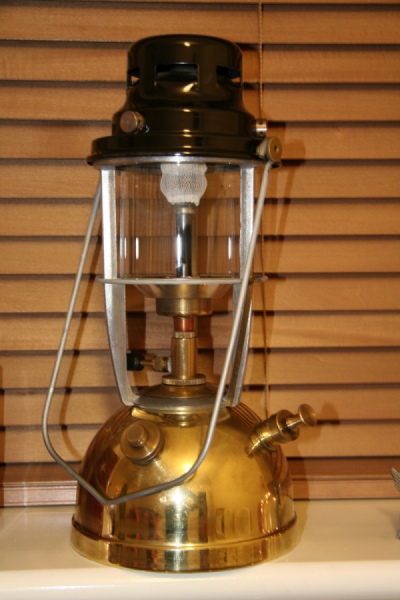
There was virtually no electricity then, except in towns. People ran the big old valve radios and the new TVs from car batteries. Lights were largely Tilley lamps, which gave a beautiful bluish light; the paraffin was expensive enough, so people waited through the lengthening dusk till it was dark enough to light the Tilley, then there was a ceremonial, silent, happy time of lighting it - heating the lamp with methylated spirits, then gradually pumping up the paraffin, making a fine pressurised gas, so that the light blossoms and blooms. Then the lamp was set in the window, and in each cottage one light showed across the sea, a beacon for the homecoming fishermen.
The west of Ireland has a warm microclimate because of the presence of the Atlantic Ocean and the limestone crags acting as a giant storage heater.
The traditional cottages of the 19th and 20th century were a masterpiece of insulation. Typically, the walls were two feet (60cm) thick, solid stone mortared with a mixture of sand and bull's blood, then plastered and whitewashed.
A turf fire was kept going all day, every day, winter and summer, with the embers smoored over with ash at night so it kept alight and warm under there. The cottages were built directly on the crag, and this limestone floor and the limestone walls took in the heat and radiated it gently back.
Turf was cut all over Ireland from the bogs; islanders who had no bog of their own bought púcán-loads of turf from mainland farmers. All winter, every cottage had a pile of turf stretching from the ground to the rooftop, against the cold northern gable, providing superb insulation against the winter wind and cold.
This was so universally recognised an image that Padraic Colum wrote it into the longing of his poem An Old Woman of the Roads:


O, to have a little house!
To own the hearth and stool and all!
The heaped up sods upon the fire,
The pile of turf against the wall!

All gone now. If country people have a pile of turf outside the house, it's neatly ranged against the garden wall, or sitting on the universal patch of lawn that fronts Irish rural houses' road access, outside their walls.
Other customs have gone with the turf. Then, the main room of the house - kitchen and living room - was set around a gigantic chimney. On the left, as you face the fire, was the woman's place - all women sat here, from the tiniest baby to the old, old lady whose place was on the stone bench actually inside the chimney; and on the right was the men's place. A hole in the wall on either side kept things handy for each sex: the woman's knitting and magazine or novel; the man's pipe.
Every house had musical instruments - with luck, an upright piano, but at least a fiddle or a melodeon; everyone could play a little, and many people played and sang beautifully.
Everyone also sang and whistled at work: the production of music had not yet been outsourced to professionals.
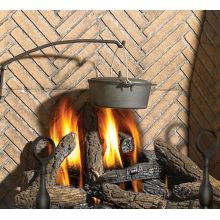
Cooking was done in big pots using a crane, a device that swung the pot in over the fire and could lower it or raise it to boil or simmer or sauté. A kettle was always purring on the hob of the fire, and bread was made in a pot oven or on a griddle set against the fire - delicious smoke-scented breads and stews and roasts came from these methods.
People collected seaweed - dillisk for drying and chewing and putting in soup; the gourmet treat slabhcán - sloke or nori or laver - for rinsing and frying up with rashers; carrageen for jelly and sore throat cures. They dried fish on the thatch in the salt wind, and cooked it with milk and onions and ate it served with buttery mashed potato. The lamb and beef produced on these crags was sweet and tender. Every woman kept a few hens and ducks, so there were eggs for eating and for sale and the odd cockerel for the pot. Most people had a cow, or if there was a 'delicate' child in the house, a goat, for milk. For Christmas, people raised geese and turkeys.
All this makes the life sound idyllic. It was not; it was a lot tougher than now, with no farm or fisheries payments or dole to provide a cushion against poverty. At the time that JM Synge - himself a tuberculosis patient who defied his illness by rambling and walking all over the country - wrote about the Aran Islands, a medical investigation reported almost universal malnutrition among the islanders.
When better times came, people fled the smoky, draughty cottages and built snug, well-insulated homes with slate rooves (thatch was thought of as a fire hazard and a home for the tubercules that spread TB). They put in Stanley and Aga ranges to keep the house warm, and later oil-fired central heating. The drifting turf smoke that scented the approach to every house in the old days was gone: more efficient combustion burned even the smoke.
A whole way of life has changed utterly in half a century: now, the typical country house runs a 4x4 and a runaround, cooks on an induction hob and in a fan oven, heats with oil - though the Stanley may still be on the go.
What will the next half-century bring? A natural pessimist, I'm reminded of the famous account of a visitor to Connemara in the 18th century being feted with a board piled with good food and wine imported from France and Spain; a few years later the Act of Union sent capital fleeing from the country, and another half-century later starved creatures crawled through this countryside on their four bones.
But maybe I'm wrong. Maybe we're about to have a revival, where we build even better houses, use the land even better, and live snug and cosy and well-fed and creative and happy.

Saturday, 1 September 2012

The RIC

From Padraic Colum's book My Irish Year, about the midlands of Ireland in 1912 (downloadable from archive.org)


That evening I had an adventure with two members of the army of occupation, or, as some would prefer to call them, the army of no occupation, the Royal Irish Constabulary. 
Between the town of B and the village of C I came upon a brace of constables. They were lying in the ditch, smoking their pipes. As I passed I remembered that there was an inquiry in my mind that the patrol were competent to answer. I determined to raise the question on our next meeting. 
Outside the town I met the children of my friends and turned back. We caught up a country woman who was carrying some packages and a heavy basket. The children helped her with the parcels, and I took possession of the basket. When we came to the police again I was one of a group of country people. They were still in the ditch. 
I turned to one with the query, '' Would you tell me the meaning of a proclamation that I saw in Carrigallen last Tuesday?" Now, unawares, I was asking an invidious question, as this proclamation had reference to the withdrawal of extra police from the County Leitrim. 
" The meaning of the proclamation—would you like to know ? " 
" Yes." 
" Why didn't you read it ? " 
"I was too far away." 
" Then you can go to Hell." 
There was notliing to be done at the moment, so I lifted the basket and went on with my friends. Later I came on the patrol ; they were leaning against the parapet of the railway bridge. 
" Your pardon, gentlemen," said I, " were you the constables I met a while ago ? " 
" Would you like to know ? " said one, and " What's that to you ? " said the other. 
I asked for an apology for rudeness, but they said, " Go home now, or we'll throw you over the bridge." 
Their insolence came from the fact that they regarded the country people as Eastern officials regard the provincials. Such a woman sold porter illicitly ; if her friends were uncivil to the constables they could show their power. So-and-so's children grazed a few cows along the side of the road ; if their father raised his head there would be a case of technical obstruction. I saw how easy it was for the Royal Irish Constabulary to fall into the insolence of Turkish officials. 
Next morning I called at the barracks. The sergeant, good, easy man, was recovering from an attack of delirium tremens and was " shook " as the saying is. He asked the constables to apologise, but again they used the word " Hell." I might have communicated with the authorities had I not a prejudice against addressing myself to DubHn Castle. 
The Royal Irish Constabulary are a force of 11,000 armed men, distributed through 1475 stations. They are not under local control, but are ordered directly from Dublin Castle. For their upkeep the Imperial power raises £1,400,000 in Ireland, an amount largely in excess of the grant for national education. 
In the main they are a rural force, but they are extended to the cities of Belfast, Cork, and Londonderry. In country places individual constables look bloated and patrols have an easy-going air. One comes to regard the Constabulary as a rural police with little to do. But let us go into Connemara and enter a police hut in a lonely place. The constables are probably idle and unbuttoned, but there are rifles and bayonets to hand, and the hut has the position of a blockhouse. 
The life of Ireland has been forced back on the land, and the most powerful of Irish efforts has been directed to the liberation of the land in the interest of the majority. Against all forms of agrarian agitation stand the Royal Irish Constabulary with their rifles and bayonets, their drill and revolver practice. 
Why does Murty Flynn join a force that stands against the interests and passions of his class ? There is the bribe of a livelihood, and the fundamental muddle of the human mind prevents him from seeing the conflict in clear terms. They tell of a constable who had to assist at the eviction of his father, and Murty himself knows of a recruit, sent down with an extra levy to the County Clare, who found himself guarding a rancher's cattle against his father's hazel stick. The direct conflict rarely occurs. 
Murty's father has four sons. One of them will inherit the farm, and another may obtain the means of getting some land. For the rest there is emigration or casual labour. Murty is not studious enough to become a teacher, nor has he enough application to succeed as a shopkeeper. He is a big, healthy lad, with a fair intelligence and a fondness for outdoor life. 
He offers himself to the Constabulary. There are many applications, but Murty obtains a place, and his people are as glad as if they had got two acres of land. Constable Murty Flynn begins with a renumeration exceeding that of the assistant teacher in the local school. With twenty-one shillings a week, he has various allowances, and is lodged in the barrack at a slight charge. 
Promotion is almost inevitable, as there are 1859 sergeants and 451 acting-sergeants to 8380 constables. He is sure of a pension, and is under no necessity of saving. There are three Constabulary men in the station — an easy-going sergeant with a wife and family, Murty Flynn, and another constable. 
His day is really idle. He goes on parade at 9 a.m., when there is elementary drill, then for a while the three sit in the station smoking, going over the rules of the Constabulary and the Acts of Parliament governing the action of the police. Two go on patrol at 11 a.m. —that is to say, they stroll through the country for a couple of hours. 
They attend the arrival and departure of the Dublin trains, secure the newspapers, and read them on their way back. There are more patrols in the evening, and each constable has to put in six hours per day in outdoor duty. 
Sometimes the constable has to collect statistics for the Department of Agriculture, and some writing has to be done. Murty Flynn is well content with the life. He knows in the force men who are good Irishmen, good Catholics, and good citizens. After seven years he can obtain permission to marry, and many goodlooking girls would be glad to wed a man who can take them away from the hardship of the farm — a man of assured position, moreover, with a pension, who need not make himself anxious about a dowry. Murty's comrade intends to remain single for the next twenty years ; then he can retire with a pension of at least £42 per annum, when he intends to marry a girl with a dowry and set up a shop.