Showing posts with label Ireland. Show all posts

Wednesday, 16 October 2013

Dublin City Council arts funding


The deadline for applications for arts funding from Dublin City Council is November 4, 2013. The council's arts officers ran a seminar on Tuesday October 15 to help people to apply.
Four things to remember: that deadline is 5pm on Monday. If you get your application in at five minutes past five, it will be refused. There are no days of grace.
If you're applying for funding, this is not given for 'arts practice' - it won't fund you sitting at home and writing your novel or painting your picture, or going to London to research your history in the libraries there. It is given as a community grant, to help the arts in Dublin, so your project must have some outreach into the community.
The council prefers for at least 30 per cent of funding to be provided by other sources - so if you have a project, get a commitment from other sources to pay for a third of it, and you'll have a better chance of your grant succeeding.
And all applications need proof backing their claims: if you say that your community group is going to have a play put on in the Abbey Theatre, you need a letter from the Abbey management saying this. "The more you can give - backup letters of support from organisations you've worked with, the more we can see of your practice," the audience was told."
City Arts Officer Ray Yeates presented a seminar and question-and-answer session on these grants in the Wood Quay conference venue on October 15, with help from arts officers Jim Doyle and Sinead Connolly, administrative officer Victoria Kearney and Jonathan Ekwe of the arts office's administrative team.
There are three types of funding, Ray Yeates said: revenue funding, project funding and neighbourhood funding.
Revenue funds groups that have an ongoing relationship with the council; no more of these are being added, this group has been capped, and the groups being currently funded are being evaluated randomly.
So that leaves project funding and neighbourhood funding, each of which offer grants ranging from €2,000 to €10,000.
The arts staff said that there are much more applications for project funding - so neighbourhood funding might be a good place to target. 
Your supporting material for your grant application - letters from artists and theatres and community groups and so on - should fit into A4 folder
The applications are read by four people - arts officers or qualifiers - with the applications randomly distributed to lessen the chance of people being swayed by knowing applicants.
Dublin is small, so the arts officers probably know nine out of ten of the applicants, but with new applicants, everyone gets interested. "At the team meeting, we start to debate, if there are new things, if there's a change in a grant, differences or exceptions," said Mr Yeates.
At this stage a shortlist is made.
Arts grants are not given by arts office, but by the City Council, they stressed. There are two external examiners - for example, last year's were visual arts curator Cliodhna Shaffrey and a playwright from Cork.
If there is a governance issue - for example, a conflict of interest or a concept that's not filled out, these examiners will look at the application.
Then two councillors come & are given all of the applications. These councillors ask searching questions - "We sometimes have to advocate for a project". 
There's more than 100 years of experience going to debate your application, between the arts officers, the councillors and the external examiners.
This procedure can be sent to you in written form - it's public and transparent. (http://www.dublincity.ie/RECREATIONANDCULTURE/ARTSOFFICE/ARTSFUNDING/Pages/ArtsFunding.aspx)
The core criteria used for judging applications are: 
  • Quality of artistic work - innovation, imagination, deeper thinking, work that has reframed an idea into another idea - "Knock us out," said Mr Yeates.
  • Audience being served - is there an audience and what is it.
  • Feasible project design with realistic financial projections: "If you only give €2,000 and we have to raise €10,000, how can this be realistic? Proof, for example if you've had a funded project and it worked. Common sense - we're looking for if it'll probably work."
  • Accessibility for diverse audiences and participants in terms of location, cost, people with special needs.
  • Ability to secure other source of funding, including in-kind funding (such as a free theatre, or a fashion designer who has given costumes, etc) (see specific criteria relating to different grants). "We want to see the money going on this project. You can value in-kind funding yourself - for instance, if you get a week in Smock Alley that's worth €2,000."
  • Artists' fees in accordance with professional practice. "It is OK for artists to take shares, for example, in the box office, but we prefer them to be paid. We really don't want artists to be working for nothing." The context is very important. "But if we saw most of the money going on marketing, not on the artists, that would break the criteria."
  • Public presentation of work in the city - "We represent the public - though action research projects will be considered, for example, workshops, etc in neighbourhoods. We don't fund research." 

Research projects may be covered. "If you're at home researching the impact of 17th-century arts funding on today, we won't fund that; but if you're studying impact on different communities, and going to do an installation, then that's in the public area, involving more people than just you on your own - it's action research. You need to name this community - 'hope to', 'aspire to' don't work, and you need supporting documentation showing that they agree. Verify everything. Don't say 'we're going to play at the Abbey Theatre' - prove it."
Because this funding comes from Dublin City Council, the council is only allowed to fund things that happen in Dublin.
In the case of a non-Irish person applying, "We're entirely blind to where you're from; as long as it's happening in Dublin you're as welcome as flowers in May," said Mr Yeates, to a happy laugh from the audience. "We're doing our best to engage with others who are non-Irish, non-graduates, etc."
The arts office has done an analysis of the residential spaces; 50% have gone to non-Irish applicants - and about 50% of the non-Irish are north American, so non-European. Some of these are employed to live here for a year and work, for example in the Red Stables residential studios. 
The specific criteria for Project Grants:
  • A specific thing that you want to do that will start & finish at a particular time. 
  • Quality and artistic ambition.
  • Track record of the individual or team - "Tell us about it, we'll get help to understand it. If you're new, we have to judge. We have a tiny amount of money for an enormous number of applicants. You may, for instance, form partnerships. Track record is important. If you've no track record, you've never been to college, etc, it's difficult, so show you have help."
  • Feasibility of project within known and realisable resources: "We want crazy ideas, but we want them possible. Put the thought into the left brain: time, planning, numbers. Known and realisable, not aspirational."
  • Ability to secure at least 30% of your funding from other sources. "We're an investor. We're hoping to give you a stamp of approval."
  • Budget to include professional fees 
  • Public presentation of work in Dublin City. "We're all for making things happen, and there isn't a hierarchy," said Mr Yeates.
  • Project must have a start and finish date - three months, one day, etc; better if it's within one year, but not necessary. 
If you don't use up all of the grant - if the arts office give out 100 grants and 15 come back and have difficulties, the arts office may have trouble keeping this funding. "If you get into trouble with the project, don't suddenly change the project, come back to us. Change of date isn't too bad, but change of core details will have to go into an appeals project. Sometimes it's too much of a change and we can't do it."
Who should apply: "We realise that to make something happen in the public domain you have to apply - but you may need to have a team of people. Or if it's an individual, you have to tell us how it's going to happen.
"We're very used to visual artists applying as individuals; we're not after subsidy of practice, but after a specific project - show how you'll go into a particular venue, etc."
A question from the audience: "The 30% funding requirement from partners - how do you get over the problem of funding being related to possibility of other funding - for instance 'I've got a promise of money if I do the event'?" Mr Yeates said: "You just have to have it on paper. We want the application to help your project work. Think of it as if it were your own money you were putting in: what would you believe. And the 30% needs to be - at least some of it - in cash and not in kind."
Any individual arts organisation can only be funded for a single project per year. 
The response on funding comes in January, and the project can't start before January, because the project is for a particular year. "If we can be flexible we sometimes give an indication - but without the city council voting, sometimes we can't give the grant till February because of date of council meeting - we can't give the grant without the vote."
You can draw the fund down pretty quickly when it's announced; it depends on what time of year your project takes place. "If you get your letter saying you've received funding, just contact us and say when you're starting, etc. We do have a draw-down procedure, with reporting, etc."

Neighbourhood funding criteria:
  • To animate & support local arts activity in the city. Not to support community development primarily, though it may do that powerfully.
  • To contribute to enhancing/creating a sense of local identity. For example, consider, if you're working in Inchicore and you're doing something with no local relevance 'is it a mushroom or a parachute' - are local people growing up into it.
  • Connection and interaction of the arts activity to the neighbourhood.
  • Involvement of a professional artist or artists in the project. "This is important because local people can't just think 'let's all be artists' - we want a professional input."
  • Reaching specific populations (for example,  young people, old, underserved populations) - like a project that used Muslim women in dance project using the movements they use in prayer.
  • Ability to meet cultural diverse interest through inclusion.
  • Level of involvement of participating groups, eg input into project design.
  • Ability to secure at least 30% funding from other source.

"We're not getting as many applications for neighbourhood funding as we want," said Mr Yeates.
An artist can apply for neighbourhood funding by herself, if the project has relevance to a Dublin neighbourhood.
As many as possible should be met; "otherwise I get into picking which are more important".
Almost the same percentage of the available money goes to neighbourhood and project funding; "even though we get vastly more applications for project".
Applications involving sport, for instance, are acceptable, but the project needs to be something of quality.
'Neighbourhood' refers to a specific geographic area, but a group could be in a neighbourhood. If your group straddles two areas, for instance Dublin city council and SDCC, "it's ok, but we're going to debate it". 
If you apply and fall into wrong section - you apply for neighbourhood funding when you should have applied for project - "I just cannot get over how kind people are; I've seen people say tthey applied for the wrong thing' - so applications can get sent to correct one of neighbourhood or project if the application was wrong in first place."
The arts officers will go to Vimeo or YouTube to view links in applications - "but test your links, and also give an alternative in case one link doesn't work; and don't rely on your link to make the case for you; your case has to be made in writing. Think about us - there are five of us and if you've got an error, we really can't be calling you up to ask for elucidation."
In the neighbourhood category, "we often get excellent ideas but no proof of the quality of the artist you intend to work with, and that really weakens your application".
Also, you need to document the fact that the artist is happy to work with you, happy to work in the community, etc. "Get them to say, in a letter, that they are happy and involved. Evidence, evidence, evidence. Your vision must be based on reality."

Apply here: 
Dublin City Council Arts Office

Wednesday, 24 April 2013

Elsewhen

This is the first story in my collection Love. When I wrote it years ago, it was a playful homage to the mediaeval love stories based on the model brought back from the Middle East. I never knew it would prove so prophetic.

ELSEWHEN, the sky darkened over Fatima Mansions. Friday night, the call of a muezzin mixed with the Angelus bell and the handbrake turns of a stolen BMW. Joy spoke from the concreted yards.
The Omurchu caravan was coming into town, the camels tired and cranky as they trudged down Christ Church Hill. Tomáisín saw a door open, glimpsed in the blue paraffin light a family saying the Rosary, detailed as a Mansur miniature: grandmother, wives, daughters, faces lifted to the statue of the Virgin. 
The door closed, Tomáisín and the lead camel swinging forward to guide the line of beasts through the evening traffic jam.
A Guard held up his white-gloved hand as the Angelus rang, sounding its eighteen notes from the cathedral high behind them, the notes echoed and tolled by mosques here and there in the city. 
The traffic drew to a halt, drivers bowing their heads as the bell-notes struck on car radios. A one-handed man begging for a cigarette stopped with his mark, both faced east.
As the notes faded the spell of stillness fell away. Tomáisín's camel was bitten and lashed back. The ex-thief's cigarette was lit, the prosperous mark cupping the flame of the petrol lighter. The Guard repossessed his anger, stormed over, saw Tomáisín's Omurchu features -
"Is it yourself, Mr O. Go on ahead, so."
Tomáisín steered the camel train around, into the square, kicked up a leg and slid from the camel he rode. "Hang on a tick, I just want to check the bookings," he said to his overseer, Pangur. Pangur led the string of beasts in and parked them by the wall.
 As Tomáisín called the hotel, the Perspex door of the kiosk framed a picture, another picture for Tomáisín. Two women with buckets of disinfectant and floppy mops washed blood from the cobbles. A tipper truck full of boulders backed into position, directed by a porter from the bank. By the fountain an old lady stood, her eyes above her veil fixed on the barred truck from Mountjoy Gaol.
Tomáisín felt a shudder run down his back at this ordinary scene. He turned away.
The booking cleared, he remounted and led the caravan along the one-way system and across the bridge to Capel Street market. 
"You go on, Tom," said Pangur in his high voice, "I can clear up here." His broad Welsh face turned, checking the loads against the bills he held. 
"Are you sure?
"Sure, why not. I'll settle the lads in their hotels and join you after. Get this lot stabled. Go on and have a few pints."
Tomáisín Omurchu walked away, the sound of his shoes sharp, echoing through the streets following the dying echo of the bells back across the city, into the valley where Fatima Mansions rises, and where Ayishe is waking from her sleep.
I awake from sleep, the photograph of death, and go immediately to check my image in the mirror. The face is the same: had I expected it to change? I put on my grandmother's chador, consider, does it look as well with my red hair as it did with hers? My eyes stare back, Celtic grey, Moorish downward slant. Their expression does not reflect my thoughts. The stranger in the mirror is there again. "Ayishe, come to serve the food," calls my co-wife, and I go. Is the pictured person the mirror shows me a representation of creation?
I look out from the top flat, looking over at Christ Church and the river. My husband, like my family, is a thief, a super thief as he boasts, and an elderly one who has never lost so much as a finger. He sends me to work for him, setting up the men. 
We sit and watch television. First an American programme, guns and heroics, then a veiled Irish newsreader, her eyes furtive. We are laughing at the news when the call comes: I am sent over to the hotel by Capel Street Market. 
Tomáisín turned on the television. A newsreader. Little news. Stock market report: Omurchu up 4. 
"Can I get you anything, sir?"
Plausible face, blank, serviceable. "A pipe? Newspapers?" The face watched him. "A woman?"
"Why not?"
"Any preference, sir?"
"Not really. Clean."
So in she came and turned on the bath. "I want the tap end, mind."
"Hey — you're supposed to pamper me, make me feel like a master, not squabble over the bath."
"Oh yeah? And risk my life too?"
I climb out of my shalwar and dress and shake off pants and vest, sit on the edge of the bath and put the toes of one foot into the steamy water.
"Is it very bad at the moment?"
"You have to be joking. The Legion of Mary are everywhere, handing out immaculate medals and brown scapulars. Again you get a pint in your hand it's whup out and you're handed a Pioneer total abstinence pin. Girls being stoned to death wholesale in Dame Street. Bad? Are y'in earnest?"
She was in the bath, blue lights showing in her red hair as she fanned it behind her, careful to keep it out of the water. One strand escaped and he lifted it clear, wrung it out like a washerwoman.
"So what do you want me to do? Tell you stories?"
"Stories?"
"Some men like that." His skin is smooth, dark and gold. His wrists are full of grace, widening to where the muscles run under the sleeves of his T-shirt. "Diarmuid and Gráinne. That's a racy one." My voice doesn't break but it roughens. What is this?
Tomáisín sat on the edge of the bath and looked at the woman. The rich flesh of her belly appeared and disappeared shyly as the water moved. Her nipples were small, unusually so. He could have covered them with a finger, a forefinger pressing each button. Her lips pressed out, a warm rose. 
I take the soap and begin to lather myself. I can feel my heart beat, even with my fingertips. Is he going to get on with it? In the way of business they sometimes need encouraging. Why is my heart beating so. I must have a fever coming on. Have I frightened him with all that old chat about executions? Of course he could buy himself out, no bother, but sometimes it's the rich fellows who are the most cautious.
"Did you come far, today?"
"Mullingar."
Is he not getting in the bath, or what?
"You must have been fairly shifting."
"The old camels can cover the ground, all right."
She kicked out the plug, wrapped herself in a yellow towel and sat on the edge of the bath, steaming, the steam rising gently into a cloud around her. Abruptly she dropped to her knees and caught his foot as he tapped it.
"Shoe the little horse,
 "Shoe the little mare,
 "But let the little colt go
 "Bare, bare, bare." 
She looked up at him, her lip caught between her teeth as she smiled. "What age are you?" She stood and walked to the bed, the towel falling until it trailed from one shoulder and she was a collection of shadows: her shoulder blades, her neck, her waist, the hollow which put a stop to the line from back to bottom. "Turn up the light." Her voice trembled.
He turns to the globe, but instead of pumping the pressure up he opens the valve and with a brief hiss the light turns from blue to yellow and shadows shoot up the wall as the light fades. 
"What's your name," he whispers, and when I tell him, he whispers, "Ayishe."
He crosses his hands and strips up the black T-shirt, falls beside me.
They lie together. Downstairs the porter is calling the Guards. Yes! He is a member of the Pádraig Pearse Youth. 
I look at him, Tomáisín. His eyes are very black, big and glossy. We have finished making love, he licks my lip with the tip of his tongue and my mouth floods with fresh water. 
"Love," he whispers, "Oh, love."
"Oh love," I whisper, "where did I find you?"
"Sweet one, I'm here."
Yes, they have found each other, and they lie together, these two strangers, his tears running into her eyes and her fingers holding the soft hair beside his ear.
When the knocking comes on the door I am safe in his arms.
"Open up. Open up. I am a Garda." The door shakes as the men kick it and hit it.
How sweet his kisses are.

Saturday, 9 March 2013

Bríd, Dog of Genius

THIS is Bríd, an old lady now, her spine raked with spurs so that she can't race and play as she once did. But still the same sweet, kind nature, the same naughty playfulness, the same sense that she is the guardian of the household who must sleep in the place best sited to guard those she loves.
And superdog.
Bríd is a dog of language; she understands a surprising amount of what you say. I first copped this when she was a pup of around nine months old.
I have fairly nasty asthma and spend a lot of my time sick, and Bríd is a hairy girl. There was no way she could be allowed upstairs if I didn't want to suffer from the effects of her shedding. At the time I was minding Luna,  a cat for an American friend who had re-re-re-emigrated, and Luna lived mostly upstairs; despite Luna's own furry generosity, she was homeless; what could I do.
Bríd's ambition was to make friends with Luna, and have her as a plaything playmate. Luna's was to have a peaceful purry life without more than a courteous touching of noses with this bounding pup.
So there I am hoovering around the living room, and chatting away to Bríd in an absent-minded way, sometimes singing along to La Mer or Boum, sometimes just maundering on, as you do when a pup is dogging your footsteps. And I said those fateful words:
"Wonder where that pussycat is?"
Bríd laid her ears back and gave me a thoughtful glance. She switched her ears forward again - and with tail going like mad, she ran out to the hall and put her forepaws on the bottom step, and peeked up the staircase.
I was gobsmacked. I hadn't made any gesture, anything like that; it was purely the word 'pussycat' that she'd responded to.
A few weeks later, another job having gone from under me in the collapsing employment scene of Irish journalism, I decided the hell with it, I was going to spend recklessly on petrol and drive out to Greystones for a walk.
I drove out, we walked up and down the almost-deserted beach, I lay down with a book and tried to read for a bit while Bríd nestled against my side, but it was a windy day and I got tired of spitting out hair and sand, and said the hell with it again, and got up and went back to the car.
And found that I'd dropped my keys.
I looked at the expense of the beach, tried to work out where we'd been lying, made my way there and looked hopelessly at the empty sand.
Bríd was romping in and out of the waves and galloping around. I turned on her and gave her (natch) dog's abuse, telling her that we couldn't drive home if we didn't find my keys. "Where are they?" I cried wildly. "Find the keys! Keys, Bríd! Keys!" I wasn't, of course, expecting any action; this was purely relief of spirit.
But Bríd looked keenly at me, looked keenly at the sand, started nosing around, then digging, and up came the keys.
Never was a dog so praised or so proud. Mind you, her genius (apart from understanding every word you say) has failed to show up much in recent years; she hasn't found any thousand-euro notes, say, or chosen the right Lotto numbers (though that may be because I don't actually buy Lotto tickets; my fault, really).
But still. Bríd, Dog of Genius.

Thursday, 20 December 2012

The Landlord's Friend - free ebook (download link at foot)


MARY LEADBEATER was the postmistress of Ballitore village on the border of Kildare and Carlow in the heart of Ireland, and a birthright Quaker. She was the first girl pupil in the school run by her grandfather, Abraham Shackleton, in the village a famous school, where Edmund Burke and Napper Tandy studied together, and Quaker parents from as far away as Norway, the Caribbean and France sent their sons to study. 
She is best remembered for her journal, published as Annals of Ballitore, which includes on-the-spot reportage of the horrors of the 1798 uprising of the United Irishmen and its suppression by the Anglo-Irish yeomanry, with the lynchings that followed. 
Mary also wrote several pamphlets — a popular pastime for well-got ladies of the time. Her Cottage Dialogues are unusual in their approach, because Mary lived among her poor farmer neighbours, rather than seeing them from on high, and understood how it was possible, if difficult, for someone hungry and impoverished to claw the way into modest prosperity.
The Landlord's Friend consists of 20 dialogues, between two landlords — the Quakerly Squire Hartely and the more typically Anglo-Irish Squire Wilfort; and two landladies — the Quakerly Lady Seraphina and her ditsy friend Lady Charlotte; as well as Mrs Wilfort, and Lady Seraphina's tenants. 
The squires discuss schemes for the improvement of the peasantry; the ladies get down to practicalities, and their dialogues involve visits to the model village under Lady Seraphina's patronage. ("What neat, white houses and pretty gardens are here! Do, Lady Seraphina direct your coachman to drive slowly that I may take a survey of them.")
In her earlier Cottage Dialogues, Mary had used the experience of her grandfather: Abraham Shackleton had been a poor English boy who gained an education through growing sallies and weaving baskets from them; by planting and selling his produce, seeds and plants; by working for anyone who would give him work, and finally by becoming first a monitor then a teacher in the small school where he was a pupil, until he was called to Ireland to open and run the new village school in Ballitore. By Mary's time the family were quietly well off.
Mary was unusual as a 19th-century pamphleteer in deciding to turn her instructive hand to her betters, the Anglo-Irish landlords who were the scandal of the empire to which they gave their loyalty. When she came to write The Landlord's Friend she used her keen ear for dialogue to capture both the speech and language of the Ascendancy and those of the Irish tenants who laboured under their rule. In these dialogues Mary strokes the egos of her landlord audience by picturing the delighted praise of tenants for those who will help them — while accurately reflecting the brutality of landlord attitudes. Here, for instance, in a dialogue on bedsteads, one landlord tries to persuade another to set up a scheme whereby his tenants may buy beds, and improve their health:
Squire Hartely: You cannot but have observed the lodging places of many of the poor.
Squire Wilfort: I have, with disgust. I would scarcely lodge my hogs in such a manner, but I suppose they imagine that dirt keeps them warm. 
Even in the model Quaker village (such places were regarded with astonishment at the time, as Italianate freaks of cleanliness and order), the tenants flustered by the visit of their landlady on an errand to award annual prizes to the nicest homesteads, show themselves lax:
Lady Charlotte: Judy O'Flinn, why have not you had your window mended? Is not that your husband's sunday hat stopping the broken pane?
Judy: Indeed, my Lady, I’ll not tell you a lie. It is Bill’s best hat, sure enough. We were laid out to get it mended these six weeks, and, I don’t know how it was, but we did not get it done.
Amid Mary Leadbeater's feeding of landlordly egos, her true loyalties sometimes break out, as in her story of a baby taken in by a wetnurse for cash. Years later, the foster parents tell a visiting lady of their fosterling's death and how the garden he planted remains a comfort to them:
Thomas: We strove to divert ourselves with [our garden]; and I loved these little trees which he planted, and I cut off the straggling boughs, as he used to do, that they might grow up handsome. Ah! He was suddenly taken from us.
Lady Charlotte: How old was your son?
Thomas: Just the age of Kitty there. Three and twenty last Patrick’s day!
Lady Charlotte: Twins!
Thomas: No, my Lady.
Lady Charlotte: How is this? Did you not say they were of the same age?
Thomas: Please, your Ladyship, our dear Henry was a nurse child from Dublin. We were paid very well for him the two first years, but after that we never heard of his father or mother, and we were often in dread that they would come and take him from us, and my poor woman often said she would beg the world with him, sooner than part with him. But now we are obliged to part with him.
Lady Charlotte: What uncommon affection!
Lady Seraphina: Not at all uncommon! There are many such proofs of the strong attachment of the Irish to the children committed to their care, and of the humanity and generosity of the Irish character.  
What effect The Landlord's Friend had on its audience is difficult to gauge. It was published in 1813, which is to say 15 years after the 1798 Rising — and 32 years before the outbreak of the Famine that cleared Ireland of millions of people, when landlords and merchants shipped out food crops and grew rich, while their tenants starved to death or, if they were lucky, emigrated to a country without landlords. 
Download The Landlord's Friend here: http://www.4shared.com/file/-3qQjw9Y/The_Landlords_Friend.html?

Wednesday, 5 December 2012

Lest we forget, lest we forget

When we were growing up we learned that the real wrong of the Famine of 1845-50 was that Irish goods and food were shipped abroad while the people of Ireland starved.
We swore - and we believed our own swearing - that such a thing was unconscionable, and it could never happen again. Yet this year alone, €20 billion was paid out to banks abroad by the Irish government while the budget imposes increasing need, deprivation and hardship on the people of Ireland. We are doing exactly the same again.
Here's a contemporary quote, from May 1, 1846, from the Anglo Celt newspaper in Cavan:
It is indeed painful to consider the state of Ireland. In a land teeming with plenty and abundance we have a famine. More than two million Irishmen are starving while we export more provisions than would feed five times our population. Out state would be much improved were those who derive large incomes from this country to expend at least a portion of it among the people from whom they receive it.

Friday, 30 November 2012

Payment system needed for international small business

I HAVE a stove in my living room, a wonderful thing that pours out heat. It's well assisted in this by a device called an Ecofan, a Stirling engine assisted by a small electrical motor. The Ecofan sits at the back of the stove, and as soon as the iron surface beneath it heats up, the fan starts to turn, sucking in cold air from behind and pushing forward the hot air that would otherwise be trapped above the stove. The Ecofan makes quite a difference to the heat in the room, as well as being pretty and cheering as it whirls its golden blades.
But it's important not to put it at the front of the stove, because if you do that, the heat from the chimney can destroy the motor. This is pretty counter-intuitive: it would seem more sensible that it should sit at the front and push the air out from there. So naturally the fan gets put to the front; and naturally the motor gets nuked.
No problem. You can get new motors, at various prices. And a north-of-England chimney sweep called Andy offered to buy a motor from the English supplier (which, strangely, doesn't ship to Ireland) and wander down to his local post office and post it to me. It would cost under £15.
Now, it should be easy for me to pay Andy for this kind act. Both of us have PayPal accounts, checking accounts in the bank, local post offices. But it's not that easy.
Euro cheques are regarded as the work of the devil by British banks; in fact, you can't even pay someone in France with an Irish euro cheque, or vice versa - so much for the vaunted single currency.
Sterling bank drafts and the like are designed for businesspeople doing huge transactions. They'll charge you an arm and a leg for your £15 deal.
PayPal seemed the best solution: I could pay the chimney sweep from my PayPal account into his. But even this proved a shocking palaver. I sent the money out of my bank and it never arrived; turned out that I had never linked my bank account to my long-disused PayPal account. When I rang PayPal they were helpful, and sorted it through, but I was surprised that it was all so complicated and difficult.
It seems to me that there's a gap in the market for a payment system that would allow ordinary people - and especially small businesspeople - to pay each other across international borders for small transactions.
As the founders of the Irish Sweepstakes discovered back in the day, many small transactions can make for one big profit. Irish sole traders could be bringing a lot of money into the country - if it was very easy for ordinary people to pay them, without the sole traders or SMEs having to set up expensive payment methods. The country needs that money, and small exports grow into large business. When's that method coming?

Sunday, 25 November 2012

Living the old-fashioned way


Then, the cottages of the west of Ireland looked like a handful of marshmallows thrown across the islands' fields. In the early 19th century, Irish cottages were grey, the colour of the local stone - My Little Grey Home in the West was literally true. But by the 1920s they were white, and by the 1950s they were a mixture of lovely pastels.
Whitewash was introduced to the rural areas of Ireland as a sanitary measure against the regular outbreaks of cholera and typhus and the endemic tuberculosis in the 19th century, and by the middle of the 20th century, it was a matter of pride to whitewash your home regularly; one islandwoman famously whitewashed her home inside and out once a week, removing all the furniture to do it.
The marshmallow colours came from some creative woman's discovery that food dye worked perfectly with whitewash. You could throw in a few tablespoons of the cheap food dye and tint your whitewash a tasty lavender or blushing pink or a shadowy indigo.
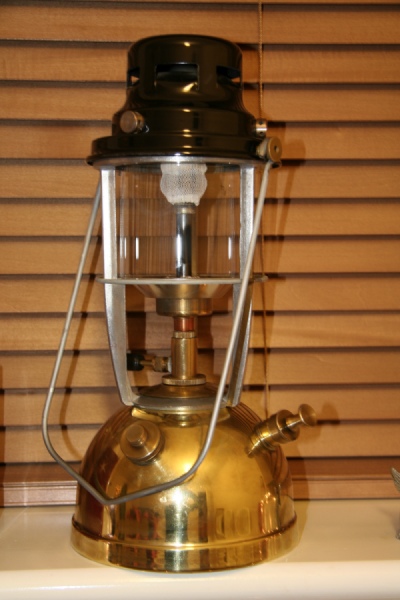
There was virtually no electricity then, except in towns. People ran the big old valve radios and the new TVs from car batteries. Lights were largely Tilley lamps, which gave a beautiful bluish light; the paraffin was expensive enough, so people waited through the lengthening dusk till it was dark enough to light the Tilley, then there was a ceremonial, silent, happy time of lighting it - heating the lamp with methylated spirits, then gradually pumping up the paraffin, making a fine pressurised gas, so that the light blossoms and blooms. Then the lamp was set in the window, and in each cottage one light showed across the sea, a beacon for the homecoming fishermen.
The west of Ireland has a warm microclimate because of the presence of the Atlantic Ocean and the limestone crags acting as a giant storage heater.
The traditional cottages of the 19th and 20th century were a masterpiece of insulation. Typically, the walls were two feet (60cm) thick, solid stone mortared with a mixture of sand and bull's blood, then plastered and whitewashed.
A turf fire was kept going all day, every day, winter and summer, with the embers smoored over with ash at night so it kept alight and warm under there. The cottages were built directly on the crag, and this limestone floor and the limestone walls took in the heat and radiated it gently back.
Turf was cut all over Ireland from the bogs; islanders who had no bog of their own bought púcán-loads of turf from mainland farmers. All winter, every cottage had a pile of turf stretching from the ground to the rooftop, against the cold northern gable, providing superb insulation against the winter wind and cold.
This was so universally recognised an image that Padraic Colum wrote it into the longing of his poem An Old Woman of the Roads:


O, to have a little house!
To own the hearth and stool and all!
The heaped up sods upon the fire,
The pile of turf against the wall!

All gone now. If country people have a pile of turf outside the house, it's neatly ranged against the garden wall, or sitting on the universal patch of lawn that fronts Irish rural houses' road access, outside their walls.
Other customs have gone with the turf. Then, the main room of the house - kitchen and living room - was set around a gigantic chimney. On the left, as you face the fire, was the woman's place - all women sat here, from the tiniest baby to the old, old lady whose place was on the stone bench actually inside the chimney; and on the right was the men's place. A hole in the wall on either side kept things handy for each sex: the woman's knitting and magazine or novel; the man's pipe.
Every house had musical instruments - with luck, an upright piano, but at least a fiddle or a melodeon; everyone could play a little, and many people played and sang beautifully.
Everyone also sang and whistled at work: the production of music had not yet been outsourced to professionals.
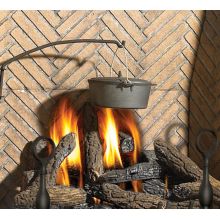
Cooking was done in big pots using a crane, a device that swung the pot in over the fire and could lower it or raise it to boil or simmer or sauté. A kettle was always purring on the hob of the fire, and bread was made in a pot oven or on a griddle set against the fire - delicious smoke-scented breads and stews and roasts came from these methods.
People collected seaweed - dillisk for drying and chewing and putting in soup; the gourmet treat slabhcán - sloke or nori or laver - for rinsing and frying up with rashers; carrageen for jelly and sore throat cures. They dried fish on the thatch in the salt wind, and cooked it with milk and onions and ate it served with buttery mashed potato. The lamb and beef produced on these crags was sweet and tender. Every woman kept a few hens and ducks, so there were eggs for eating and for sale and the odd cockerel for the pot. Most people had a cow, or if there was a 'delicate' child in the house, a goat, for milk. For Christmas, people raised geese and turkeys.
All this makes the life sound idyllic. It was not; it was a lot tougher than now, with no farm or fisheries payments or dole to provide a cushion against poverty. At the time that JM Synge - himself a tuberculosis patient who defied his illness by rambling and walking all over the country - wrote about the Aran Islands, a medical investigation reported almost universal malnutrition among the islanders.
When better times came, people fled the smoky, draughty cottages and built snug, well-insulated homes with slate rooves (thatch was thought of as a fire hazard and a home for the tubercules that spread TB). They put in Stanley and Aga ranges to keep the house warm, and later oil-fired central heating. The drifting turf smoke that scented the approach to every house in the old days was gone: more efficient combustion burned even the smoke.
A whole way of life has changed utterly in half a century: now, the typical country house runs a 4x4 and a runaround, cooks on an induction hob and in a fan oven, heats with oil - though the Stanley may still be on the go.
What will the next half-century bring? A natural pessimist, I'm reminded of the famous account of a visitor to Connemara in the 18th century being feted with a board piled with good food and wine imported from France and Spain; a few years later the Act of Union sent capital fleeing from the country, and another half-century later starved creatures crawled through this countryside on their four bones.
But maybe I'm wrong. Maybe we're about to have a revival, where we build even better houses, use the land even better, and live snug and cosy and well-fed and creative and happy.

Friday, 9 November 2012

Hot 'n' toasty wood 'n' stovey


I SHOULD be writing about editing, and offering to edit CVs, and to write press releases, and to help you with your business books, but... later, later. For now, I want to talk about the toasty-warm wonderfulness of woodstoves.
We got a wood-burning stove last year. I wanted to have a backup for the gas central heating, but it looks as if it's going to be a total replacement, as the price of gas goes higher and higher. Twenty years ago when we moved in, we changed from a back boiler heating the radiators to a gas system, as it was the cheapest and best value. Now that's changed. How that's changed.
So, stoves. I was nervous - how on earth do you choose a stove? There's new technology that means modern stoves are waaay more efficient than the old-fashioned kind. Airwash. Secondary burning.
Here's a video that explains it.
A stove heats a million times more efficiently than a fire. With an open fire, you're basically heating (and polluting) the open sky. But with a stove, all the heat comes booming out into the room, heating the whole house.
The design of modern stoves burns the fuel, and then burns the smoke that rises off the fuel, lessening pollution by 90 per cent.
The heat that comes off a stove is quite incredible when you're used to open fires, or central heating for that matter.
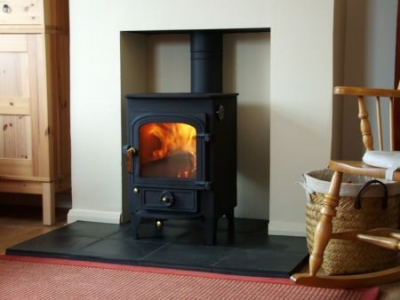
You can get two styles of stove: free-standing, and inset or insert stoves. Free-standing means the stove stands there on its little legs out in the open. Like this:


You may also like to add a fan on top of your free-standing stove. These range from classic Stirling engines, which have no wiring but work purely from the heat of the stove:


to the Ecofan, which has some wiring and electrical magic. I have an Ecofan - because the Stirling engine is a big yoke, a foot high, and there wasn't room above my stove's top. The Ecofan, I can attest, makes a heck of a difference, throwing the heat out into the room:


An insert or inset stove it sits into your existing fireplace, like this:


or if you prefer a stylish, modernistic look, like this:


If you're going for an insert stove, and if you're in Ireland, you're better off to buy one of the Irish or British brands - the English-made Clearview (my own stove is a Clearview free-standing one and I love it, so I'd definitely recommend the brand, and Co Down Stoves where I got it), or the Boru Croí Beag


or the Stanley Cara


The reason for going for these rather than the superb European brands - top-of-the-range Nestor Martin or Morso or J otul or Stovax - is that Irish fireplaces tend to be both narrower and shallower than the European ones. Unless you're rich enough and patient enough to tear out the whole fireplace and rebuild it, you're not going to get one of the European brands.
This isn't necessarily a bad thing - though they're fabulous stoves. The Nestor Martin, for instance, can run two pipes off a stove, piping heated air for other rooms. And some of these stoves have soapstone sides or inserts, so they'll act as storage heaters, radiating heat long after the fire is gone.
Inset stoves sound as if they wouldn't give off as much heat, but they certainly do; they're toasty. Part of this is the fact that they block off the giant sucking draught that chimneys bring into the room; part is that they just radiate enormous amounts of lovely hot hotness.
I wouldn't be without a stove ever again; if I ever can, I'll put one in upstairs as well as downstairs and leave the central heating behind altogether.


Sunday, 9 September 2012

Solar panels - why not get together on them?


One of my buddies was telling me the other day about her friends, an electrician, a plumber and a marketer, who were made redundant just as the Celtic Tiger's claws fell out.

There was a grant at the time - with the Green Party in government as they were then - for putting in hot water solar panels. It wasn't much of a grant, but it gave people an incentive and lots of households were installing the panels to get their water heated for free. It looked like an opportunity to avoid emigration, which was the friends' only other choice.

So the three friends got together and formed a company to instal the panels.  They pooled their redundancy money, started marketing and started putting in panels on houses all over their locality. They were an instant success: reliable, reasonably priced, honest, fast. The order book filled up in no time.

Then the new government, under the evil aegis of the Troika, withdrew the grant. The orders dropped away in a few days, and the three friends were out of a job, and had lost all their money.

It's kind of insane that Ireland, where we're desperately trying to cut down our carbon footprint, isn't using the economies of scale to get everyone using the sun to heat their water. This is one of the most successful green technologies for our climate: you have water heated to 65 to 70 degrees Celsius for most of the year.

Fitting solar hot water panels costs an average of €4,000 per house including the cost of evacuated tube solar panels (the best kind), new piping, a specialised immersion tank, and labour. For that you get a 60% average cut in your hot water bill - the largest part of your electricity bill.

But €4,000 is too much for most people at the moment; people can't commit to spending that much on one payment.

Ireland could cut our carbon footprint enormously - and give jobs to thousands of people currently out of work - if there was a State scheme which would buy the panels wholesale and hire the skilled plumbers, electricians and builders now out of work to instal them. 

If economies of scale were in place, and if no corruption was involved of course, it could be possible to instal solar hot water systems in every home in Ireland for an average of €2,000 per home.

If people could then repay that money over five years on their utility bills, there would be no cost to the State, yet thousands would be returned to work and Ireland's carbon footprint would be enormously aided.

This is really a no-brainer: it won't cost the State anything, because people will pay back the price of the technology on the never-never, but will slash our carbon costs and save the environment. As well as making life a lot more comfortable for Irish households.

Saturday, 1 September 2012

The RIC

From Padraic Colum's book My Irish Year, about the midlands of Ireland in 1912 (downloadable from archive.org)


That evening I had an adventure with two members of the army of occupation, or, as some would prefer to call them, the army of no occupation, the Royal Irish Constabulary. 
Between the town of B and the village of C I came upon a brace of constables. They were lying in the ditch, smoking their pipes. As I passed I remembered that there was an inquiry in my mind that the patrol were competent to answer. I determined to raise the question on our next meeting. 
Outside the town I met the children of my friends and turned back. We caught up a country woman who was carrying some packages and a heavy basket. The children helped her with the parcels, and I took possession of the basket. When we came to the police again I was one of a group of country people. They were still in the ditch. 
I turned to one with the query, '' Would you tell me the meaning of a proclamation that I saw in Carrigallen last Tuesday?" Now, unawares, I was asking an invidious question, as this proclamation had reference to the withdrawal of extra police from the County Leitrim. 
" The meaning of the proclamation—would you like to know ? " 
" Yes." 
" Why didn't you read it ? " 
"I was too far away." 
" Then you can go to Hell." 
There was notliing to be done at the moment, so I lifted the basket and went on with my friends. Later I came on the patrol ; they were leaning against the parapet of the railway bridge. 
" Your pardon, gentlemen," said I, " were you the constables I met a while ago ? " 
" Would you like to know ? " said one, and " What's that to you ? " said the other. 
I asked for an apology for rudeness, but they said, " Go home now, or we'll throw you over the bridge." 
Their insolence came from the fact that they regarded the country people as Eastern officials regard the provincials. Such a woman sold porter illicitly ; if her friends were uncivil to the constables they could show their power. So-and-so's children grazed a few cows along the side of the road ; if their father raised his head there would be a case of technical obstruction. I saw how easy it was for the Royal Irish Constabulary to fall into the insolence of Turkish officials. 
Next morning I called at the barracks. The sergeant, good, easy man, was recovering from an attack of delirium tremens and was " shook " as the saying is. He asked the constables to apologise, but again they used the word " Hell." I might have communicated with the authorities had I not a prejudice against addressing myself to DubHn Castle. 
The Royal Irish Constabulary are a force of 11,000 armed men, distributed through 1475 stations. They are not under local control, but are ordered directly from Dublin Castle. For their upkeep the Imperial power raises £1,400,000 in Ireland, an amount largely in excess of the grant for national education. 
In the main they are a rural force, but they are extended to the cities of Belfast, Cork, and Londonderry. In country places individual constables look bloated and patrols have an easy-going air. One comes to regard the Constabulary as a rural police with little to do. But let us go into Connemara and enter a police hut in a lonely place. The constables are probably idle and unbuttoned, but there are rifles and bayonets to hand, and the hut has the position of a blockhouse. 
The life of Ireland has been forced back on the land, and the most powerful of Irish efforts has been directed to the liberation of the land in the interest of the majority. Against all forms of agrarian agitation stand the Royal Irish Constabulary with their rifles and bayonets, their drill and revolver practice. 
Why does Murty Flynn join a force that stands against the interests and passions of his class ? There is the bribe of a livelihood, and the fundamental muddle of the human mind prevents him from seeing the conflict in clear terms. They tell of a constable who had to assist at the eviction of his father, and Murty himself knows of a recruit, sent down with an extra levy to the County Clare, who found himself guarding a rancher's cattle against his father's hazel stick. The direct conflict rarely occurs. 
Murty's father has four sons. One of them will inherit the farm, and another may obtain the means of getting some land. For the rest there is emigration or casual labour. Murty is not studious enough to become a teacher, nor has he enough application to succeed as a shopkeeper. He is a big, healthy lad, with a fair intelligence and a fondness for outdoor life. 
He offers himself to the Constabulary. There are many applications, but Murty obtains a place, and his people are as glad as if they had got two acres of land. Constable Murty Flynn begins with a renumeration exceeding that of the assistant teacher in the local school. With twenty-one shillings a week, he has various allowances, and is lodged in the barrack at a slight charge. 
Promotion is almost inevitable, as there are 1859 sergeants and 451 acting-sergeants to 8380 constables. He is sure of a pension, and is under no necessity of saving. There are three Constabulary men in the station — an easy-going sergeant with a wife and family, Murty Flynn, and another constable. 
His day is really idle. He goes on parade at 9 a.m., when there is elementary drill, then for a while the three sit in the station smoking, going over the rules of the Constabulary and the Acts of Parliament governing the action of the police. Two go on patrol at 11 a.m. —that is to say, they stroll through the country for a couple of hours. 
They attend the arrival and departure of the Dublin trains, secure the newspapers, and read them on their way back. There are more patrols in the evening, and each constable has to put in six hours per day in outdoor duty. 
Sometimes the constable has to collect statistics for the Department of Agriculture, and some writing has to be done. Murty Flynn is well content with the life. He knows in the force men who are good Irishmen, good Catholics, and good citizens. After seven years he can obtain permission to marry, and many goodlooking girls would be glad to wed a man who can take them away from the hardship of the farm — a man of assured position, moreover, with a pension, who need not make himself anxious about a dowry. Murty's comrade intends to remain single for the next twenty years ; then he can retire with a pension of at least £42 per annum, when he intends to marry a girl with a dowry and set up a shop.

Wednesday, 30 May 2012

Dogs on buses


When did it happen that you couldn't bring dogs on Dublin buses? Apparently it's "at the discretion of the driver", but drivers are resolutely-anti-pooch, except for a grudging okay to guide dogs.
It certainly wasn't the case in the 1920s, when my mother and her brother and their dog Bran toured the city on trams - unwillingly in the case of Barbara and Don. Bran was an Irish terrier with a mind of his own, and if he saw the No 19 tram passing by, he would set off, the two small children towed behind him, and get on and go upstairs using the stairs at the back. (Dogs were always allowed, but had to be brought upstairs, the same as cigarettes, in those days.) Upstairs, then, often meant in the open air, and Bran didn't mind if it was raining.
When Bran felt like getting off, off he'd get, the two children gripping the lead behind him as he went down the second set of stairs at the front of the tram.
On the way home, Bran might take a vagary to have a walk in the Green Fields, beautiful drumlins now long lost, which were accessed by way of the Dark Lane, a winding, lovely lane overarched by the branches of the trees that lined it, now subsumed into Sundrive Road.
In the 1950s and 1960s and 1970s there were always dogs upstairs, on their way to their walk in the park. When did this end? Perhaps when conductors were ousted and Dublin's buses became driver-only? Or when cars started to be a thing everyone had?
You can blame the no-dogs rule for a certain amount of climate change; how many car journeys would be saved (and how much income added to the public transport purse) if dogs could take their place on the top deck again?


 Lucille Redmond's ebook, Love, gripping dark and funny stories of love and revolution, is available on Amazon and iTunes


Tuesday, 29 May 2012

Gini mac


How I imagined it would be: Enda Kenny, as leader of the new government, would stand up in the Dáil on his first day and announce: "We're all in this together. We have to solve it together. For the duration of the crisis, all government and public service and semi-state salaries are being cut to €50,000. No expenses, no increments, no massive pensions, no double pensions, no free bars or canteens."
He would say: "We were a poor country until the 1970s, then we began to climb out of it. The reasons were education - we opened free, State-supported education for all to the Leaving Cert, and then university - and a new egalitarianism that allowed talented people to follow their gift, and brought investment flying into the country.
"So now we're going to follow the same plan. We will keep and use our assets, foster our talent, grow our industries. Like Japan, we will become a country of SMEs, exporting to our neighbours; like Iceland, we will send the gambling banks off with a flea in their ear."
I expected him to fight to take back the fishing grounds that horrifyingly stupid EU policies have ruined - we have some of the best marine expertise in the world in Ireland, who could save the species now threatened with extinction. I expected Enda to keep our forests as a national heritage, to foster our arts, to put the best brains in the country to work in our enterprise management.
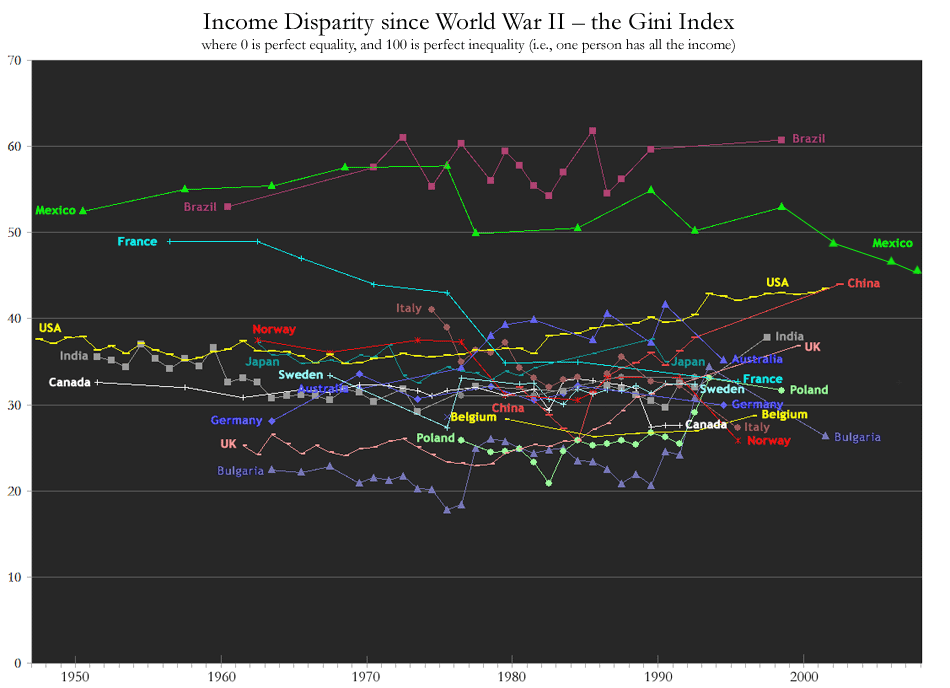
Ireland's Gini Coefficient, Corrado Gini's measure of statistical dispersion, which measures equality of income, and which is a reliable indicator of the future success of a society, has been getting worse. A low Gini figure means an equal society, and also indicates a society where people have equal chances, resulting in better healthcare, lower prison numbers, higher educational attainment, more overall wealth.
Here's a graph of how countries have been doing since World War II (being at the bottom of the chart means you're more equal, being at the top of the chart means you're less equal; if the Gini ratio is 100, one person has all the wealth, if it's 1, everyone has the same amount):


In Europe-wide figures Ireland in 2009 had achieved a Gini Coefficient of 28.8, creditably below the EU average of 30.4. Just a year later it had soared to 33.2. Figures are not yet available for 2011 and 2012, but there is no doubt that inequality is getting worse. http://appsso.eurostat.ec.europa.eu/nui/show.do?dataset=ilc_di12&lang=en
Our unemployment figures are rising, poverty is increasing - even though the real effect of this is concealed by the haemorrhaging emigration that removes huge numbers from the register of unemployment and the need for state support. 
I voted the straight left ticket in the general election, or so I thought. I was ecstatic that Labour would be in government - they would stand up for the poor, I thought, they would foster equality. I was happy that Fine Gael would lead the government; I thought they were straight and decent, and would understand that an equal society, a just society, is best for all. 
Better get back to writing fiction now.


  Lucille Redmond's ebook of short stories, Love, is available on Amazon and iTunes


Friday, 25 May 2012

Money

Money as the only value seems to be coming into its own. Every time it's suggested that terrified people in mortgage arrears should get help, some little fuck is going to start whinging "But what about me, I paid four hundred grand for this shoebox. I was thrifty. I didn't spend. Why should they be helped?"
Every time some new law or treaty or decision is mooted, every time people look at a work of art, it's "But how much will it cost?"
Kids, it's not all about money. There are other values that are more valuable, more vital, more immortal, more decent.
Money's important, but it's not the thing we should be looking to to decide our moral decisions.
Which thought comes to me from a selfish place; I've been wandering around the gaff distributing flyers for an ebook of short stories I've published on Amazon and iTunes.
To my surprise, Dublin's more elegant areas are giving up the old Irish custom of having boards in shops and cafes where local theatrical groups and plumbers and dog-walkers could bestrew their flyers and cards and leaflets. Probably doesn't bring in any business.
Even the supermarkets, where you used to be able to snaffle up an ad for guitar lessons or Swedish massage as you stood in the queue, have banished the leaflet board to some lonely pillar.
One comfort: if you do find a cafe with flyers and leaflets, it's going to be an arty place where other writers and painters hang out, gazing thoughtfully at their notebooks as they sickle off an Americano and a slice of lemon drizzle cake.
Hope is not lost, though, even in the non-arts-cafe life; there are still places that will kindly take a flyer and post it up; my heartfelt thanks to Laser DVDs and Books Upstairs and Grogan's and Accent cafe, and the many other places who have stuck a flyer up to lure those eager to read surreal stories that will haunt your dreams and nightmares through the years.

Tuesday, 24 April 2012

Beautiful things: Rowan's honey jar

Once upon a time, we made beautiful things in Ireland. Al O'Dea made lovely monastic chairs, stern and strict and stark. Waterford Glass's designers made beautifully clean and subtle designs in glass. Sybil Connolly made sexy, irresistible clothes - my mother had a dress I always wanted, silk, with an aquamarine bodice and skirt - but the skirt unlooped itself from the front and fastened on the back, revealing a reverse of deep sea-green. And that reversible skirt was in such light silk that the hem had to be weighted with lead shot, so that if you whirled around it flickered and spun around you with a faint, lovely whistling. Oh, there were lovely things, but my favourite was   very simple, the Rowan's honey jar. Rowan's were seedsmasters, with a gigantic shop in Westmoreland Street, at the centre of Dublin, where you could browse for your needs: calendula, whose peppery orange petals would give savour to your lamb stew; parsley, the secret ingredient that turns every dish to magic; sweet rocket, whose fragrance rises from the garden like an expensive French scent. But Rowan's also made honey - in those days before the horrifying neonicotinides the First World's pet owners put on their dogs' and cats' necks to keep away fleas, and gardeners put on their earth to kill vine weevils... in those days before the neonicotinoids were implicated in colony collapse disorder, which is killing all our beloved bees; in those days, Rowan's honey was everywhere, in every shop. And Rowan's honey was sold in these jars, the shape of a cell in a beehive, the shape of the joy of bees. The honey was delicious - not "a mixture of EC  and non-EC honeys", but pure Wexford and Clare and Galway and Dublin honey, won from the pollen of local plants, with the wherewithal to help your health and set your taste buds on fire with deliciousness and wonder. I still have one of these jars - somehow I managed to throw out the lid, so its lid doesn't close properly - and I decant the pretend-honeys won from acacia or  robinia or anything but native heathers and wildflowers and suburban flowers into its hexagonal glass, and try to pretend that this is the honey of my childhood, that honey I took so happily for granted, that honey that slipped onto my tongue. It's not hard to keep bees, if you're not allergic, and most people aren't; but beekeeping is not yet fashionable. It will be - in 10 years, it will become deeply trendy to have a hive on your back wall - but for now this is an unusual and slightly offside skill to have. (By the way, the Irish Beekeepers' Association runs courses, should you want to be an early adopter.) For now, all I can do is search out the beekeepers who hide in our midst, who keep their swarms in Rathmines and Greystones and Dalkey and Ranelagh, and edge up to their door to buy and take away a comb in secret. And as I take it out of its wooden structure, I'll drain it into the old Rowan's jar, and look at that lost love. 

Wednesday, 11 April 2012

Reaping the artists


I've come across several old friends in the last couple of weeks, all artists in various disciplines, and all people who supported a lifelong dedication to their craft with a couple of days' work. And all now unemployed.
The first was a brilliant man whose work is in every art-loving household in the country. I had always thought of him as someone who was on the staff of the college where he worked. But he looked up from where he was sitting and reading a manuscript with one hand and rocking his baby with the other, at a table in a cafe, and greeted me gladly, and then told me that no, he'd been a part-timer. "They were always on at me to go full-time, but I wanted to work at my own stuff." When the reaping time came, he was for the high jump. "It costs too much to get rid of someone who's on the staff, and the union will back them, and they'll be entitled to redundancy," he said.
Next was a star, a household name whose craft and technique must have been invaluable to his students in the 20 years he has taught them. One day a week, though. "It was the reaping," he said, and laughed. "They just scooped out all the part-timers and got rid of us all."
Another had a newspaper column; the editor rang up and said sorry, all the columns were going to be done in-house from now on.
Another provided regular witty, arty pieces to a magazine; de trop now that things are tight - syndicated material will fill in.
It's a crazy, crazy policy, leading to mediocrity. The best minds of our generation - of two or three generations, given that a generation is taken to be 15 years - can't work, while the play-it-safe people continue to trudge in and collect their wages.
The only near equivalent I can think of is the 1920s and 1930s, when the left-wingers were deliberately frozen out, and left the country in droves, leaving a tight-arse right-wing republic fawning on the bishops and doffing the cap to the gombeen men. And we all know what that led to. But maybe that's what the Irish people want.